BLOG

Home»BLOG
Custom vs Readymade Furniture: Cost, Quality & Lifespan 2026-07-22
By Admin

Custom vs Readymade Furniture: Cost, Quality & Lifespan

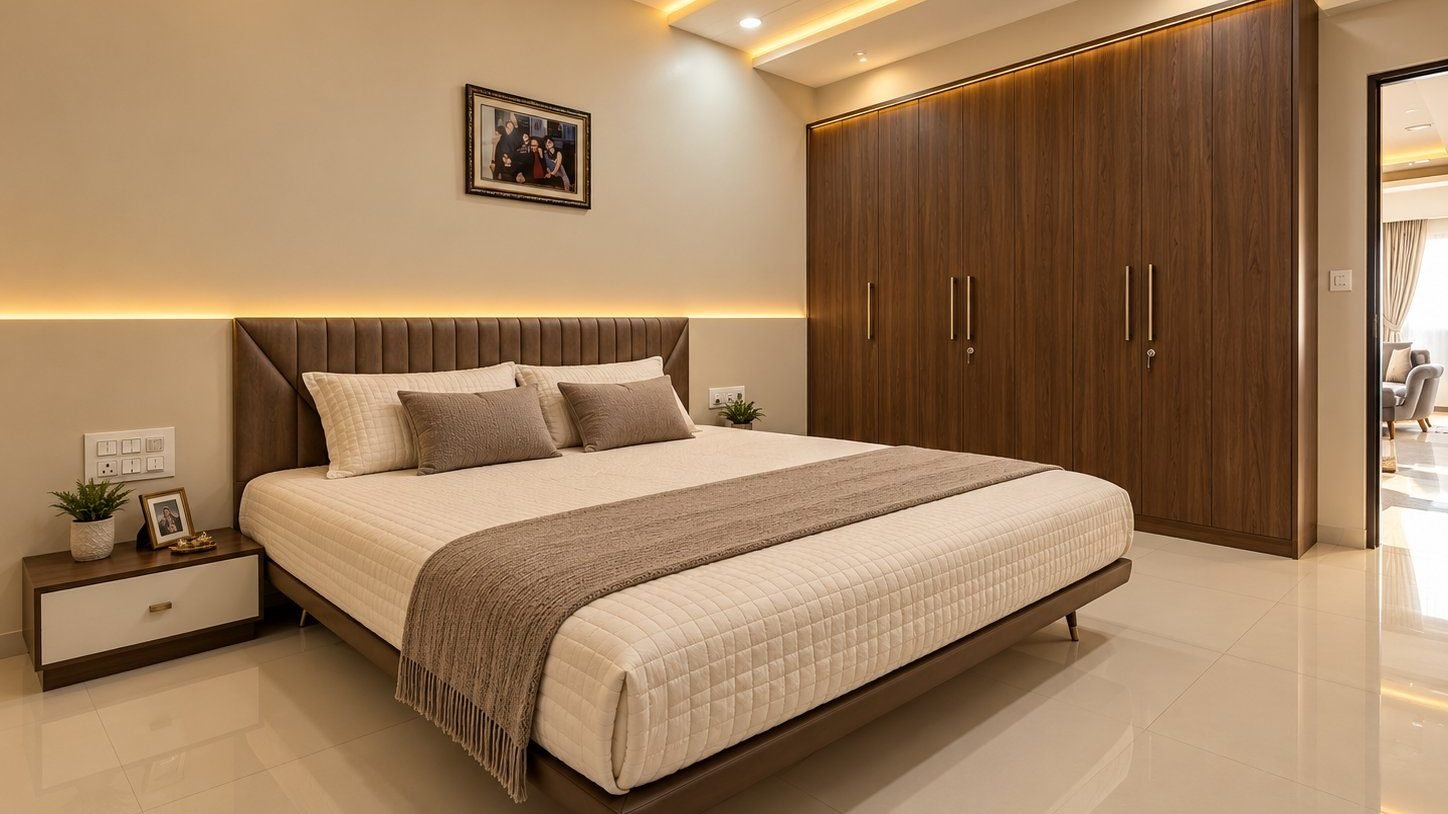
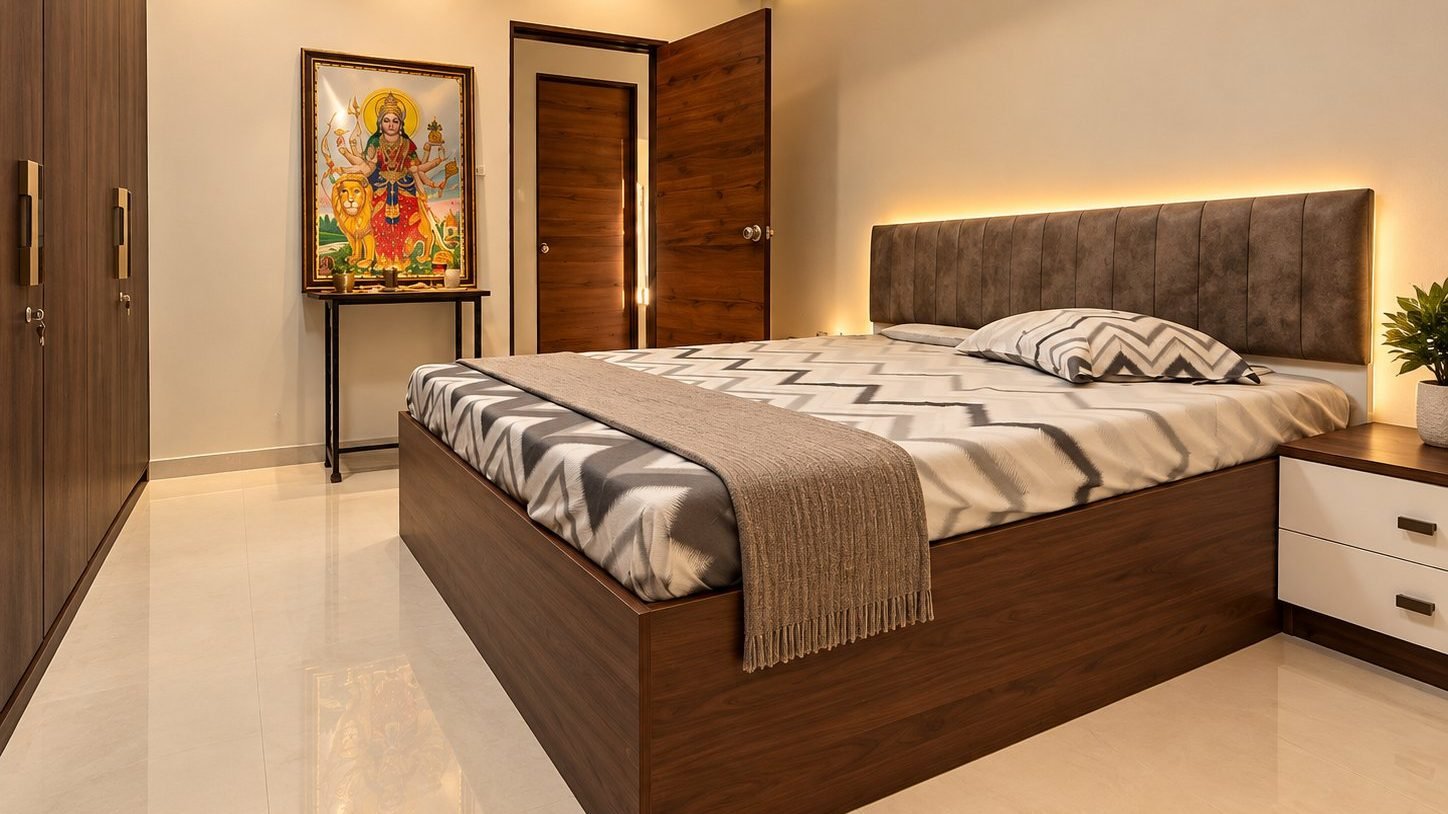
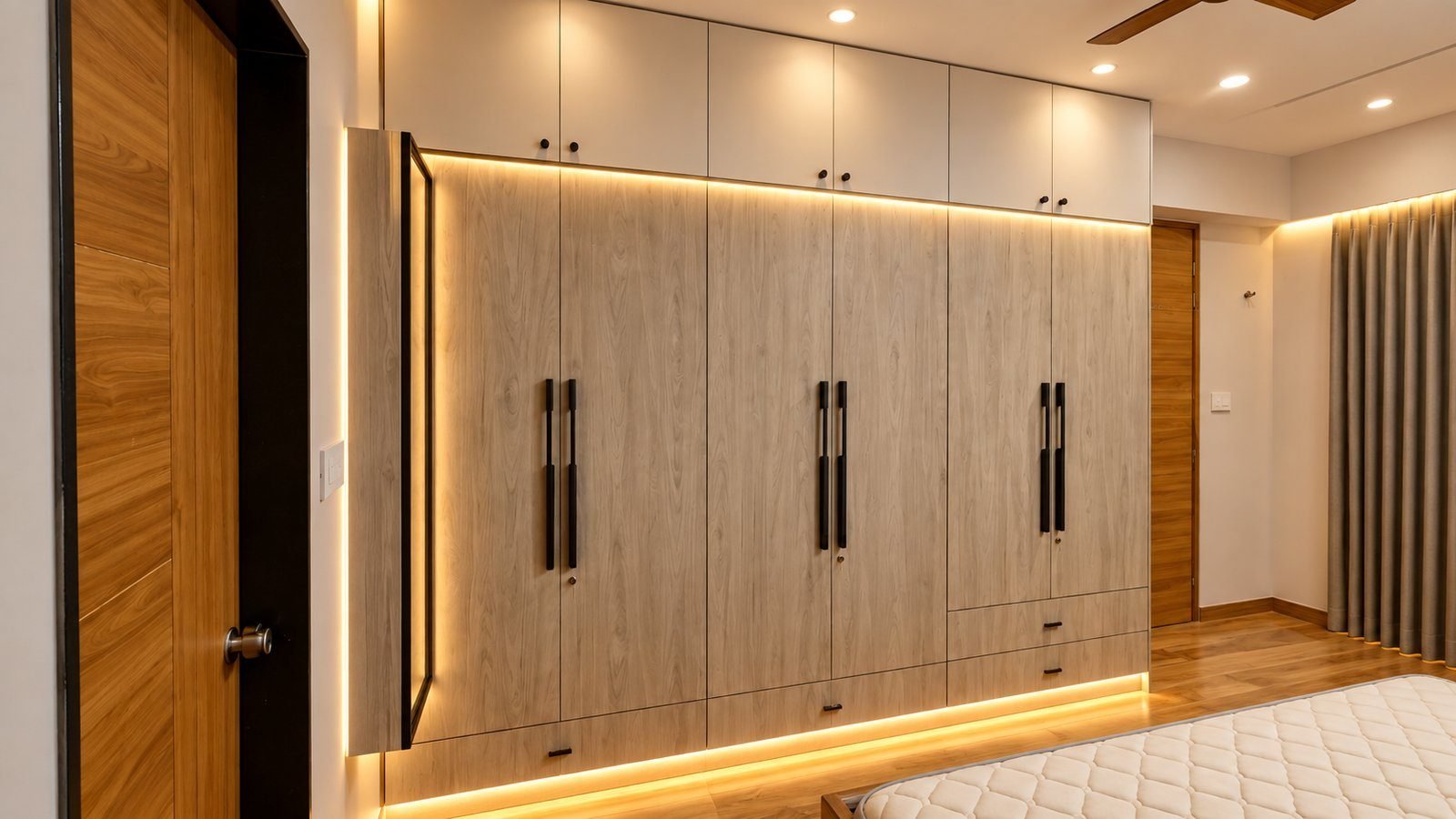
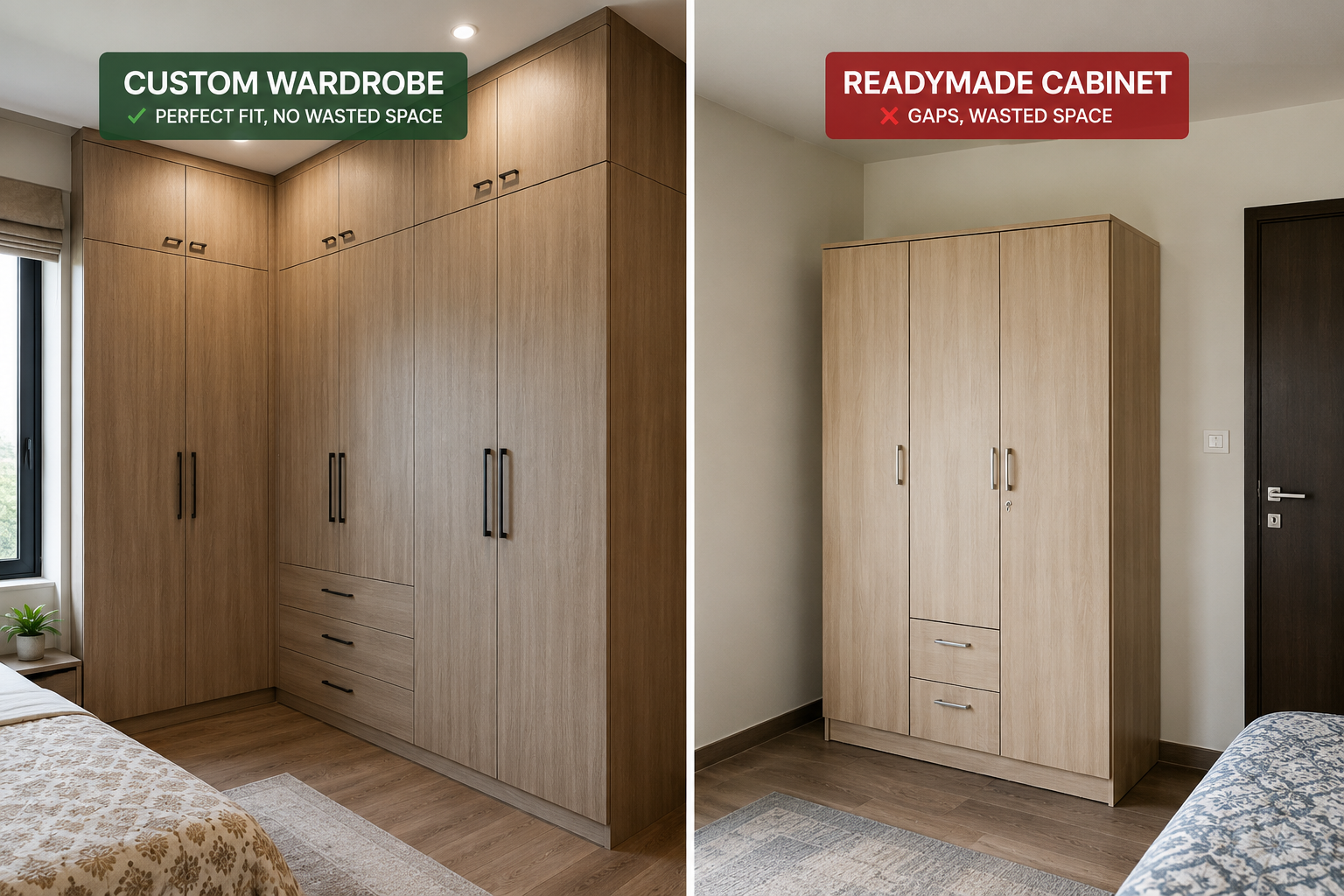
When it's time to furnish a home, every buyer hits the same fork in the road: buy readymade furniture off the shelf, or have furniture custom-made to fit your space? Both have their place. This guide compares the two honestly — on cost, quality, fit and how long they last — so you can decide what's right for your home. Readymade furniture: fast and convenient Readymade (or "ready-to-assemble") furniture is mass-produced in standard sizes and sold off the shelf. The upsides: - Immediate — buy it and take it home or get it delivered quickly. - Lower upfront price for basic pieces. - You see exactly what you get before buying. The trade-offs: - Standard sizes rarely fit your space perfectly — you end up with awkward gaps or wasted corners. - Limited choice of finish, colour and configuration. - Often built with particle board or lower-grade materials to hit a price point, which can shorten its life. - Everyone has the same piece — no individuality. Custom furniture: built around you Custom (or made-to-order) furniture is designed and built specifically for your space, taste and needs. The upsides: - Perfect fit — it's made to the exact millimetre of your room, so it uses every inch and leaves no dead space. - You choose everything — material, finish, colour, internal layout and hardware. - Better materials when you choose the right maker — quality plywood and hardware that last. - Unique — your furniture reflects your style, not a catalogue. - Higher resale value for the home, because fitted furniture looks premium and intentional. The trade-offs: - Takes longer than buying off the shelf (though good makers are faster than you'd think — more on that below). - Higher upfront cost for the bespoke design and better materials — but often better value over the furniture's lifetime. Cost: looking beyond the sticker price Readymade usually wins on the upfront number. But the smarter comparison is cost over the furniture's lifetime. A readymade cabinet in particle board that needs replacing in 4–5 years can work out more expensive than a custom piece in marine-grade plywood that lasts 15–20 years. Custom furniture also avoids the hidden cost of wasted space — a fitted wardrobe can hold far more in the same footprint than a standalone one. Quality and lifespan: where custom pulls ahead This is the real differentiator. With readymade, you're often stuck with whatever materials keep the price low. With a quality custom maker, you control what goes inside: - Core material: marine-grade plywood (IS:710) resists India's humidity far better than particle board. - Hardware: German-engineered hinges and channels (like Hettich) glide smoothly for years. - Edges: properly sealed edge bands keep moisture out. - Warranty: reputable custom makers stand behind their work for years. "But custom takes too long" — not necessarily The biggest myth about custom furniture is that it takes months. With modern factory production, it doesn't. At BOSK Furniture, projects are completed in around 45 days, with only 2–3 days of on-site installation — and we've delivered a full 3 BHK furniture set in just 30 days. Because the pieces are built and finished on imported machines in our factory, you get carpenter-level customisation with factory-level precision and speed, without the dust and disruption of weeks of on-site carpentry. So which should you choose? - Choose readymade for temporary needs, rentals, or a single inexpensive piece you need today. - Choose custom for kitchens, wardrobes, beds, TV units and anything you want to fit your space perfectly and keep for years. For the rooms that matter most, custom furniture almost always wins on fit, quality and long-term value. Build furniture that's truly yours At BOSK, every piece is made to measure on marine-grade plywood with Hettich hardware and Rehau edge bands, backed by a 7-year manufacturing warranty. With 600+ completed projects across homes, offices and hotels, we turn your space and your taste into furniture that fits like it was always meant to be there. See how our design-to-delivery process works on our How It Works page, browse our collections, or call +91 88666 47777 to start your custom project. FAQ Q: Is custom furniture more expensive than readymade? A: Usually higher upfront, but often better value over its lifetime because it lasts longer, fits perfectly and uses better materials. A long-lasting custom piece can cost less per year than repeatedly replacing cheaper readymade furniture. Q: How long does custom furniture take to make? A: It varies by maker, but factory-made custom furniture is far quicker than people expect. BOSK completes most projects in around 45 days with 2–3 days of installation, and has delivered a full 3 BHK set in 30 days. Q: Does custom furniture last longer than readymade? A: It can, when built with quality materials. Custom furniture in marine-grade plywood with good hardware typically outlasts readymade pieces made from particle board. Q: Is custom furniture worth it for a kitchen or wardrobe? A: Yes — these are exactly the items where a perfect fit and the right materials matter most, so custom delivers the biggest advantage over readymade.

Read more
Marine Plywood (IS:710) vs BWR vs MR: Which Is Best for Your Furniture? 2026-07-21
By Admin

Marine Plywood (IS:710) vs BWR vs MR: Which Is Best for Your Furniture?

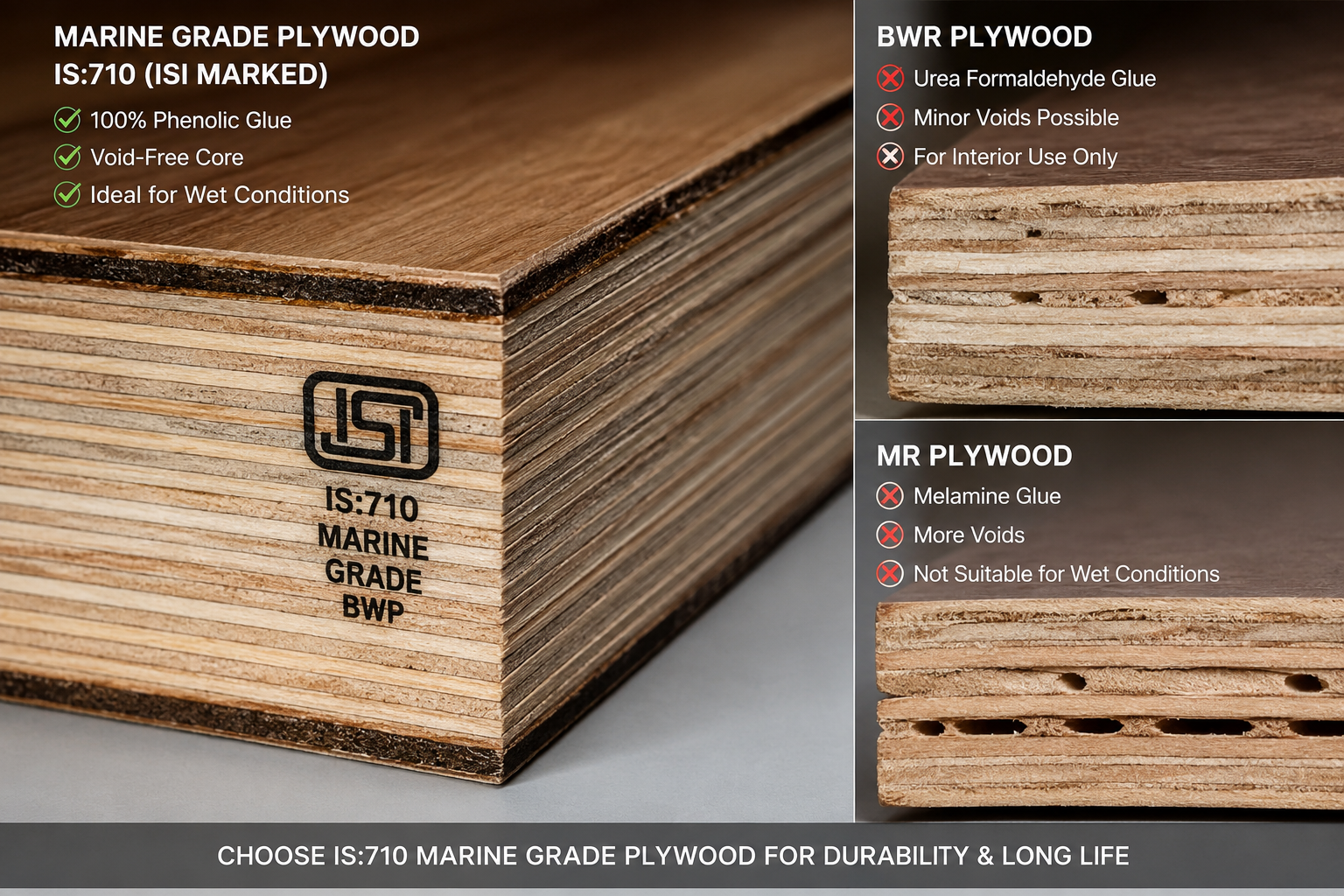
The plywood inside your furniture is the one decision that quietly decides how long it lasts — and it's the one most buyers never think to ask about. A wardrobe or kitchen made with the wrong grade can swell, warp or delaminate within a couple of years, while the right grade lasts for decades. So before you choose a colour or a handle, it's worth understanding the difference between marine plywood, BWR and MR. It comes down to one thing: the glue All plywood is made by bonding thin layers of wood (veneers) together with their grain crossing at 90 degrees — that cross-layering is what makes plywood stronger and more stable than solid wood at the same thickness. What separates the grades is the adhesive resin holding those layers together, because the glue decides how well the board resists moisture over the years. In India, plywood grades are governed by two Bureau of Indian Standards specifications: IS:303 and IS:710. MR plywood (Moisture Resistant) — IS:303 MR is the most common and most affordable grade. It handles everyday humidity but is not waterproof and shouldn't face direct water contact. In a dry, well-ventilated room it can serve furniture well for years. - Best for: bedroom wardrobes, study tables, TV units and other dry-area furniture. - Avoid for: kitchens and bathrooms — steam and splashes cause swelling and delamination over time. BWR plywood (Boiling Water Resistant) — IS:303 BWR uses a stronger phenolic-based resin, giving it real moisture resistance. It's the practical workhorse for most Indian homes and copes well with our humid climate and the occasional splash. - Best for: living-room furniture, dining tables, beds, and general furniture in humid zones. - Good to know: in lab terms, BWR survives around 8 hours of boiling water before any minor delamination. Marine / BWP plywood — IS:710 Marine grade (also called BWP — Boiling Water Proof, or "710 grade") is the highest waterproof grade. It uses full phenol-formaldehyde resin, denser hardwood core veneers and tighter quality control with no internal voids. - Best for: modular kitchens, bathroom vanities, and anywhere exposed to sustained moisture. - Good to know: it's tested to endure roughly 72 hours of boiling water without delaminating — far beyond BWR. Quick comparison - Water resistance: MR is low, BWR is good, marine is the highest. - Boiling-water test: BWR survives around 8 hours, marine endures roughly 72 hours. - Best use: MR for dry rooms, BWR for general home furniture, marine for kitchens and wet zones. - Cost: MR is the lowest, BWR sits mid-range, marine is the highest. - Lifespan in moisture: MR is short, BWR is long, marine is the longest. How to avoid being sold the wrong board Counterfeit and mislabelled plywood is a genuine problem in the market — some sellers darken cheaper MR ply to make it look like marine grade. Protect yourself: - Look for the BIS / ISI mark stamped on the sheet — IS:303 for MR/BWR, IS:710 for marine. No stamp, no deal. - Inspect the edge — veneers should be uniform with no gaps or voids. - Buy from a maker who names its materials rather than one who's vague about "good quality ply." What BOSK uses — and why it matters At BOSK Furniture, we don't leave this decision to chance. Every piece is built on marine-grade plywood (IS:710) — the most durable, water-resistant base available — because furniture in Indian homes faces heat, humidity and daily use. That's a deliberate, premium choice: it's why we can offer a 21-year warranty on the base material and a 7-year manufacturing warranty on the furniture itself. Combined with Hettich German hardware and Rehau Swiss edge bands that seal every edge against moisture, marine ply is the foundation of furniture that still looks and works right a decade later — not one that quietly falls apart after the first few monsoons. The bottom line If you only remember one thing: the plywood grade is the biggest factor in how long your furniture lasts. MR for dry rooms, BWR for general use, and marine (IS:710) for kitchens and wet areas. When a maker builds everything on marine grade as standard, you're getting furniture engineered to outlast the trends. Want furniture that's built to last? Learn more about how we work on our About Us page, see our Warranty page for full details, or call +91 88666 47777 for a consultation. FAQ Q: What is IS:710 marine plywood? A: IS:710 is the Bureau of Indian Standards specification for marine-grade (Boiling Water Proof) plywood — the highest waterproof grade, tested to withstand around 72 hours of boiling water without delaminating. Q: Is marine plywood necessary for furniture? A: For kitchens, bathrooms and other wet zones, marine grade is the most reliable choice. Some makers, including BOSK, use it across all furniture so even bedroom and living-room pieces get the highest durability. Q: What's the difference between BWR and marine plywood? A: Both resist water, but marine (IS:710) uses stronger resin and denser veneers with tighter quality control, surviving far longer under sustained moisture than BWR (IS:303). Q: How can I check if plywood is genuine marine grade? A: Look for the BIS/ISI mark with IS:710 printed on the sheet, inspect the edge for void-free uniform layers, and buy from a manufacturer who clearly names the grade they use. Q: How long does marine plywood furniture last? A: With quality hardware and proper edge sealing, marine-ply furniture can last for decades. BOSK backs its marine-grade base with a 21-year material warranty.

Read more
Modular Kitchen Cost in Gujarat (2026 Price Guide) 2026-06-28
By Admin

Modular Kitchen Cost in Gujarat (2026 Price Guide)

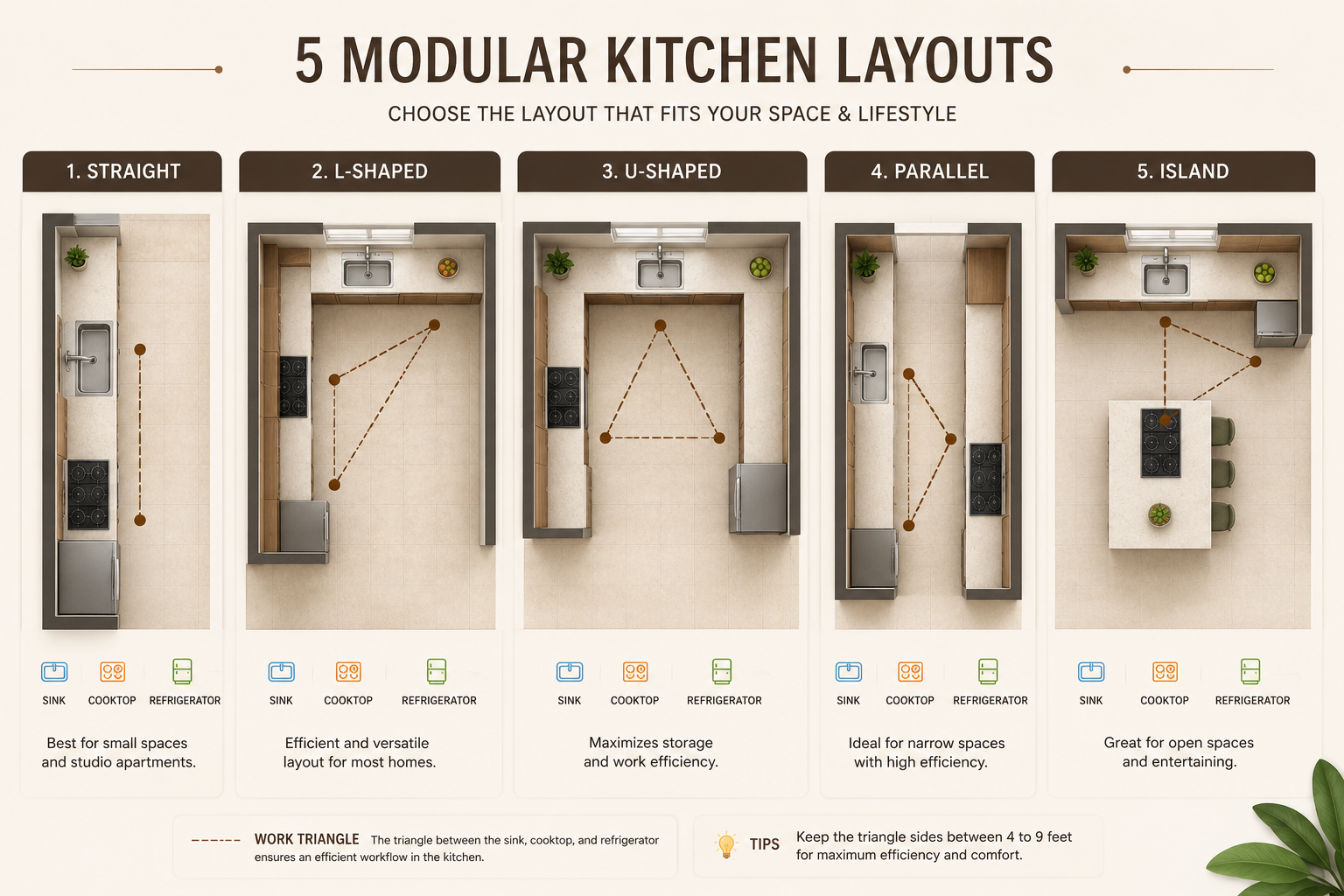
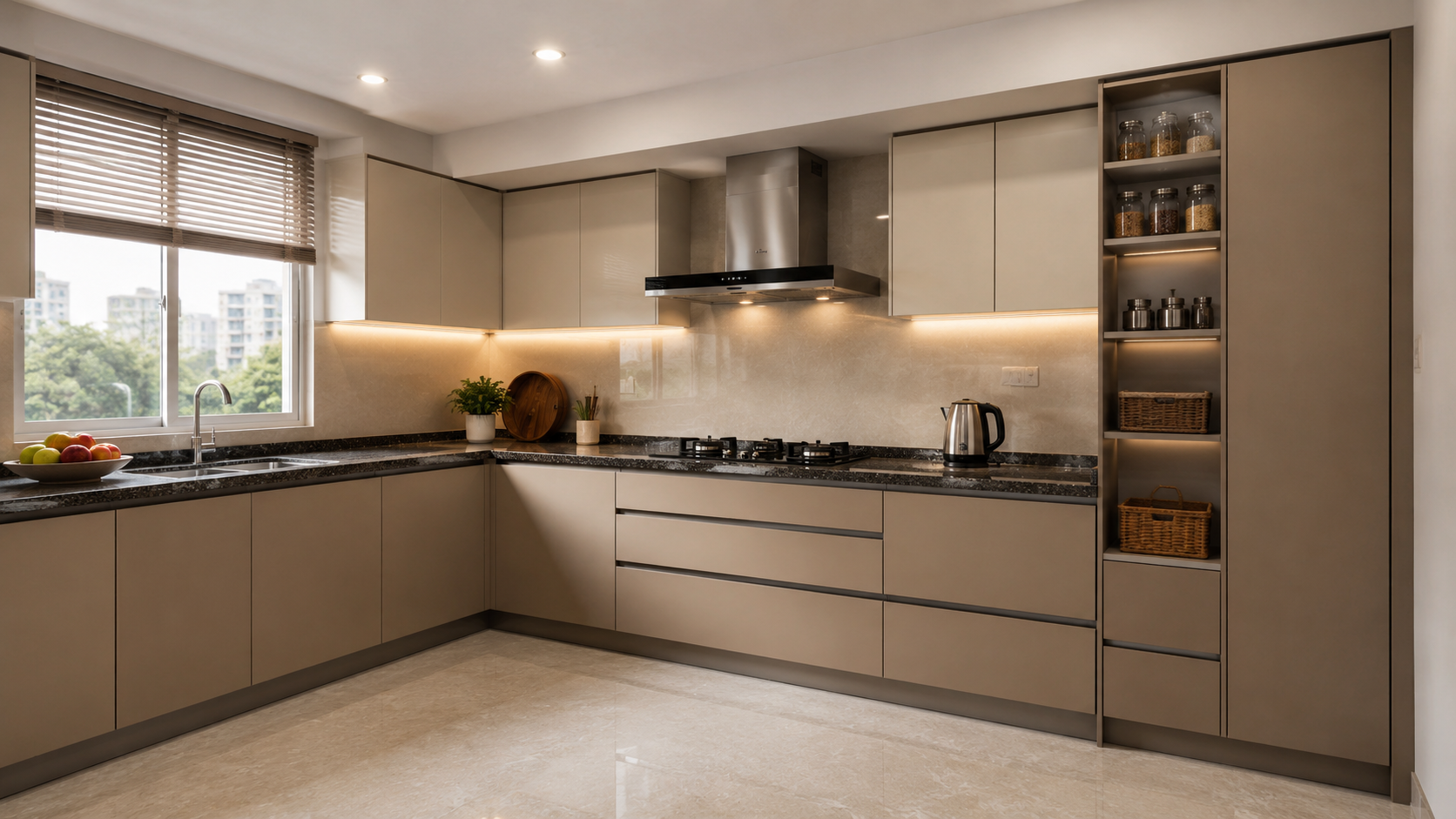
If you're planning a new kitchen, the first question is almost always the same: how much will a modular kitchen cost? It's also the hardest one to get a straight answer to. Ask three vendors for the same kitchen and you'll often get three very different quotes. This guide breaks down the real modular kitchen cost in Gujarat for 2026 — what drives the price up or down, realistic budget ranges, and how to make sure you're comparing quotes fairly. What actually decides the price A modular kitchen isn't a single fixed product, which is why the numbers move around so much. Five things decide your final cost: 1. Size — measured by cabinet running feet (the total length of your cabinet runs), not floor area. 2. Layout — a straight kitchen needs far less cabinetry than a U-shaped or island kitchen. 3. Core material — the plywood or board your cabinets are built from. 4. Shutter finish — laminate, acrylic, PU or veneer. 5. Hardware and accessories — hinges, drawer channels, soft-close, pull-outs and tall units. Change any one of these and the quote shifts. That's normal — the trick is knowing what's included. Modular kitchen cost in Gujarat: realistic 2026 ranges For most Gujarat homes, here's where budgets typically land in 2026. These are indicative ranges for the cabinetry (carcass + shutters + basic hardware), excluding chimney, hob, sink and appliances: - Compact / straight kitchen: roughly ₹1.5 – ₹2.5 lakh - Standard L-shaped kitchen (2 & 3 BHK flats): roughly ₹2.5 – ₹4.5 lakh - U-shaped or parallel kitchen: roughly ₹3.5 – ₹6 lakh - Island or luxury kitchen (bungalows & villas): ₹6 lakh and upward Prices vary with running feet, finish and hardware. A small kitchen with premium acrylic shutters and imported fittings can easily cost more than a larger kitchen built in simple laminate — so size alone never tells the whole story. Cost by layout Your layout is one of the biggest levers you control: - Straight kitchen — all cabinets on one wall. The most economical option and ideal for compact flats. - L-shaped kitchen — two connected walls. The best balance of storage, counter space and budget, and the most common choice in Indian homes. - U-shaped kitchen — three walls of cabinetry. Maximum storage, but more cabinets and labour, so a higher cost. - Parallel kitchen — two facing runs. Great workflow for keen cooks. - Island kitchen — adds a free-standing counter; beautiful in open-plan homes, but the highest tier of cost. Cost by material and finish This is where quotes diverge the most: - Core board: Plywood is the preferred choice in India for durability and moisture resistance. The grade matters — kitchens deal with steam and water daily, so the board should be at least boiling-water resistant, and ideally marine-grade (IS:710) near the sink and cooking zone. - Shutters: Laminate is the most budget-friendly and the most practical for Indian cooking. Acrylic gives a glossy premium look (but shows fingerprints), while PU and veneer are luxury finishes that cost noticeably more. - Countertop: Indian granite is durable and affordable; quartz costs more for a uniform, stain-resistant surface. The "hidden cost" trap to avoid The single biggest reason a ₹2.5 lakh quote becomes a ₹3.5 lakh project is that the original quote only covered cabinet modules. Soft-close upgrades, tall pantry units, corner solutions, lighting, the countertop, the chimney and the sink are often priced separately. Always ask for an itemised quote so you know exactly what's in and what's extra. Why a BOSK modular kitchen is built to last At BOSK Furniture, every kitchen is crafted from marine-grade plywood (IS:710) — the right material for India's humid, steam-heavy kitchens — and fitted with Hettich German hardware backed by a 10+ year warranty. Edges are sealed with Rehau edge bands from Switzerland for a clean, moisture-proof finish, and the whole kitchen is built on imported machines for a precise, factory-perfect fit. It's all backed by our 7-year manufacturing warranty and delivered in around 45 days, with just 2–3 days of on-site installation. Because everything is made to measure, your kitchen uses every inch of available space — no awkward gaps, no wasted corners. How to get more kitchen for your budget - Keep the layout straight or L-shaped where you can. - Choose laminate shutters — modern laminates look excellent and handle Indian cooking better than glossy finishes. - Pick Indian granite over quartz unless you specifically want the seamless look. - Invest your money where it counts: good core material and good hardware, because those decide how the kitchen performs five and ten years from now. Ready to plan your kitchen? The most accurate way to know your cost is a measured quote for your actual space. Contact BOSK Furniture for a free consultation, or call +91 9737817777. See our modular kitchen range and learn about our simple design-to-delivery process. FAQ Q: What is the average modular kitchen cost in Gujarat in 2026? A: Most Gujarat homeowners spend between ₹2.5 lakh and ₹4.5 lakh for a standard L-shaped kitchen. Compact straight kitchens can start near ₹1.5 lakh, while island and luxury kitchens for villas go beyond ₹6 lakh. Q: How is modular kitchen cost calculated? A: Usually by cabinet running feet — the total length of your cabinet runs multiplied by considerations of height — plus the cost of shutters, countertop, hardware and accessories. Floor area itself isn't the basis. Q: Which material is best for a modular kitchen in India? A: Plywood is preferred for its durability and moisture resistance. For the wet zones near the sink and hob, marine-grade IS:710 plywood is the most reliable choice in India's humid climate. Q: Is a modular kitchen better than a carpenter-made kitchen? A: A factory-made modular kitchen offers precise fitting, consistent quality, faster installation and a manufacturer warranty. A skilled carpenter can be cheaper upfront but typically comes without a warranty and with more variable quality. Q: How long does a modular kitchen take to install? A: At BOSK, kitchens are produced in around 45 days and installed on-site in just 2–3 days, because the modules are made and finished in the factory first.

Read more