
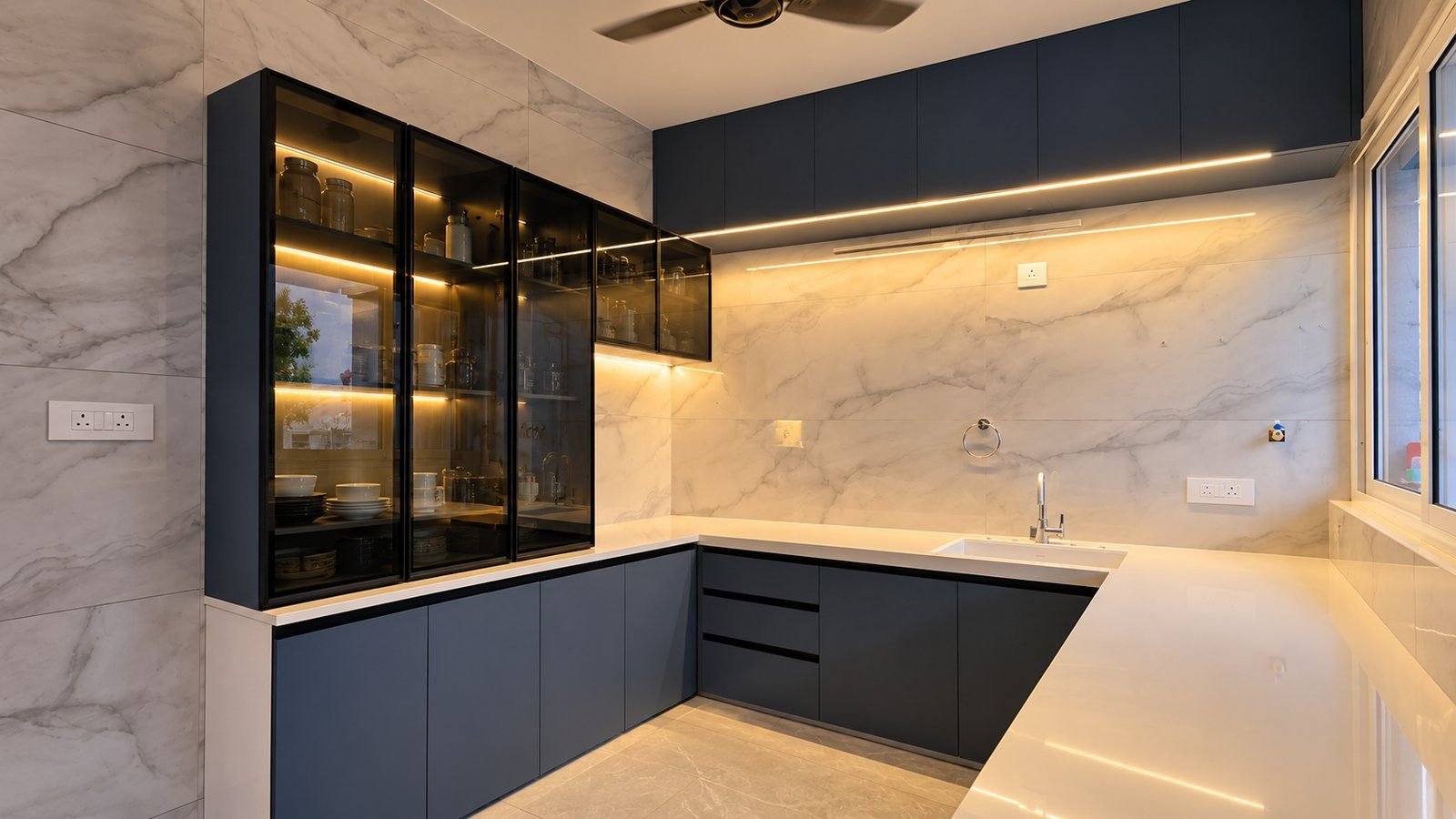
Laminate, acrylic, veneer or PU? Compare the look, durability, cost and care of each finish to choose the right one for your kitchen and wardrobes.
Two kitchens can be built from the same plywood with the same hardware and still look, and age, completely differently. The difference is the finish on the shutters. The finish decides the look, how easily it scratches, how it copes with heat and moisture, and a large part of the price. Here is a straightforward comparison of the four most common options.
Laminate
What it is: decorative sheets, usually high-pressure laminate (HPL) about 0.8 to 1 mm thick, pressed onto the plywood. It comes in matte, suede, wood-grain, stone-look and high-gloss textures.
- Tough and scratch-resistant, especially in matte and suede textures
- Handles everyday heat and moisture well
- The widest choice of colours and wood-grain designs
- Easy to clean and the most affordable option
- The edges are sealed with a matching edge band, so a fine line is visible at the edge
- Gloss laminates show scratches more than matte ones
Best for: kitchens with daily Indian cooking, children's rooms, wardrobes and any furniture that works hard.
Acrylic
What it is: a solid acrylic sheet bonded to the board, giving a deep, mirror-like high-gloss surface.
- A luxurious, reflective look in rich, even colours
- Colours resist fading
- Wipes clean easily
- Shows fingerprints, and can pick up fine scratches over time
- Costs more than laminate
Best for: modern kitchens, statement wardrobe shutters and TV units.
Veneer
What it is: a thin slice of real wood pressed onto plywood and then polished.
- Genuine wood grain, and every sheet is slightly different
- A warm, premium, natural look
- Can be re-polished to refresh it after some years
- Needs more care, and can fade or change colour in direct sunlight
- Costs more than laminate
Best for: living-room panelling, TV walls, master-bedroom wardrobes and premium pieces.
PU (polyurethane) paint
What it is: several coats of PU paint sprayed onto the board and sanded between coats, giving a seamless finish in almost any colour, matte or gloss.
- Seamless, with no edge-band lines
- Any colour, including custom shades to match your interiors
- Curved and shaped panels are possible
- Usually the most expensive finish, and it takes longer to make
- Can chip if knocked hard, and needs gentle cleaning
Best for: luxury kitchens and statement furniture.
Quick comparison
- Most budget-friendly: laminate
- Toughest for everyday kitchen use: matte or suede laminate
- Best high-gloss look for the money: acrylic
- Most natural: veneer
- Most freedom of colour and a seamless look: PU
Laminate is usually the most affordable, followed by acrylic; veneer and PU are premium finishes, and prices vary widely by brand and grade. The finish is only part of the cost, so read our modular kitchen cost guide for the full picture.
Which finish where?
- Kitchen: matte or suede laminate for heavy daily cooking, or acrylic for a glossy modern look. Many kitchens mix both: acrylic wall cabinets with laminate base cabinets.
- Wardrobes: laminate or acrylic shutters, with glass or lacquered glass as an accent, or veneer for a premium master bedroom.
- TV units: veneer or wood-grain laminate panels, with fluted details.
- Children's rooms: matte laminate, which hides fingerprints.
The finish is only the surface
In humid, coastal Bhavnagar, what is underneath the finish matters just as much. A beautiful shutter on a weak board will still swell or warp. The core should be moisture-resistant plywood, ideally marine-grade, with every edge sealed. Read our guide to marine plywood vs BWR vs MR.
The finishes we work with at Bosk
Our most popular choices are laminate, acrylic, high-gloss, lacquer, smoked glass and wood-grain finishes, all on marine-grade IS:710 plywood with machine-sealed edges. Ask our designers about veneer or PU for a particular piece. Visit our showroom in Bhavnagar to see and touch the samples side by side, and explore our modular kitchens and wardrobes.
How to care for each finish
- Laminate: wipe with a soft cloth and mild detergent; avoid scrub pads.
- Acrylic: use a soft, damp microfibre cloth. Wiping dust off dry can cause fine scratches.
- Veneer: dust with a soft cloth, keep it out of strong direct sun, and re-polish when needed.
- PU: clean gently with a soft cloth and a mild cleaner, and avoid sharp knocks.
More simple habits are in our care and maintenance guide.
Frequently asked questions
Which is better for a kitchen, laminate or acrylic?
Laminate is tougher and more affordable for daily Indian cooking; acrylic gives a high-gloss look but shows fingerprints and fine scratches. Many kitchens use both.
Does acrylic scratch easily?
It can get fine scratches over time, especially if it is wiped with a dry or rough cloth. Clean it with a soft, damp microfibre cloth.
Is veneer real wood?
Yes. Veneer is a thin slice of natural wood bonded to plywood and then polished.
Which finish is the easiest to maintain?
Matte or suede laminate. It hides fingerprints and cleans with a damp cloth.
Leave a Comment
Got thoughts on this article? We'd love to hear what you think.